

The Craft
Made by hand. Built to be used.
There are faster ways to make leather goods. Moonlight takes the slower route where it makes a better piece: choosing the right part of the hide, cutting by hand, placing stitch holes one at a time, saddle stitching where the build calls for it, and finishing the edges until they feel as considered as the faces.
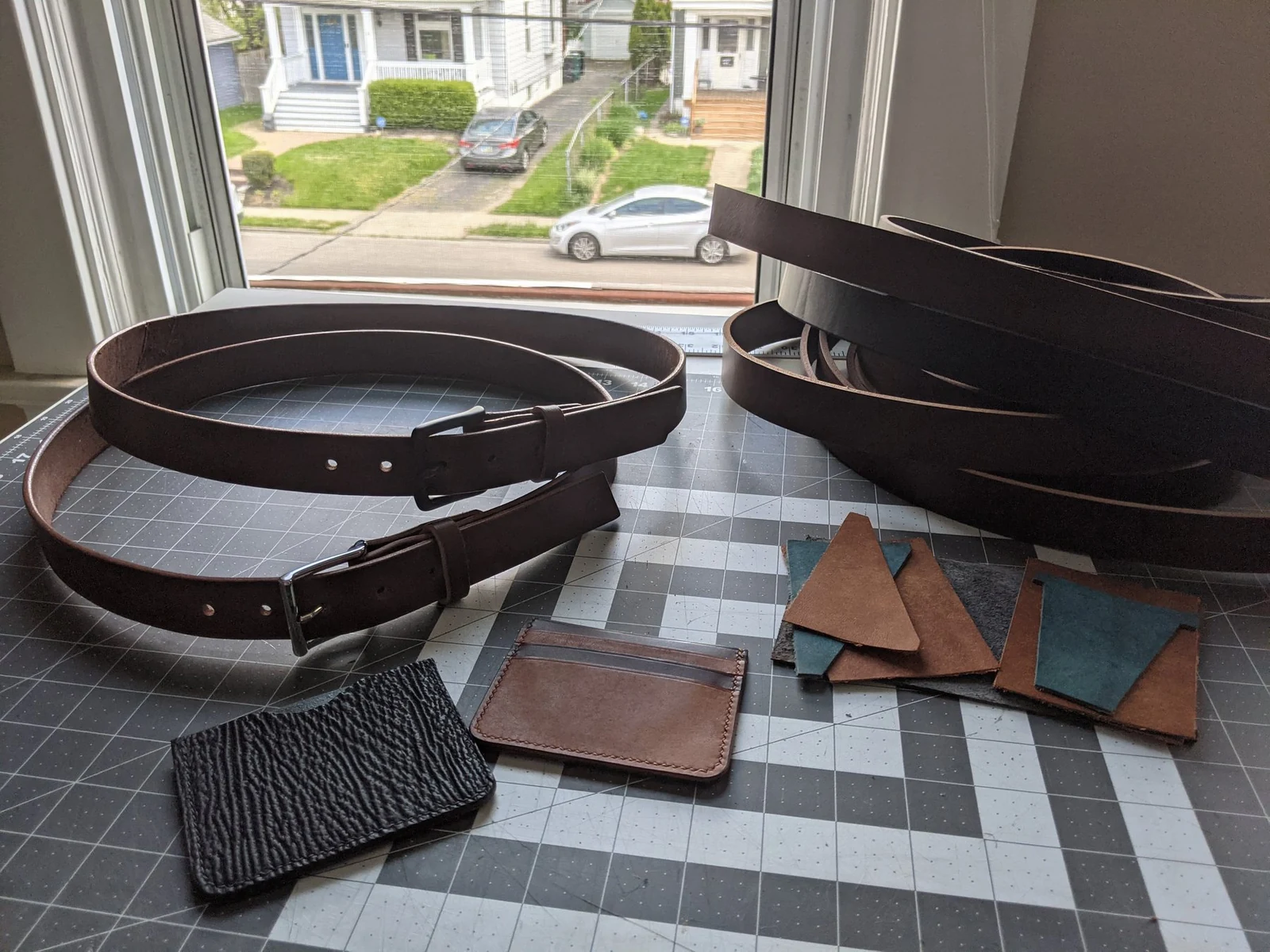
01 · The cut
Start with the hide, not a factory blank.
Leather is not a sheet of plastic. Grain, color, stretch, scars, and character move across every hide. Patterns are placed with that in mind, then cut by hand so the right parts of the hide end up in the right parts of the piece.
That is slower than stamping anonymous parts by the stack. It also gives the material a chance to stay material.
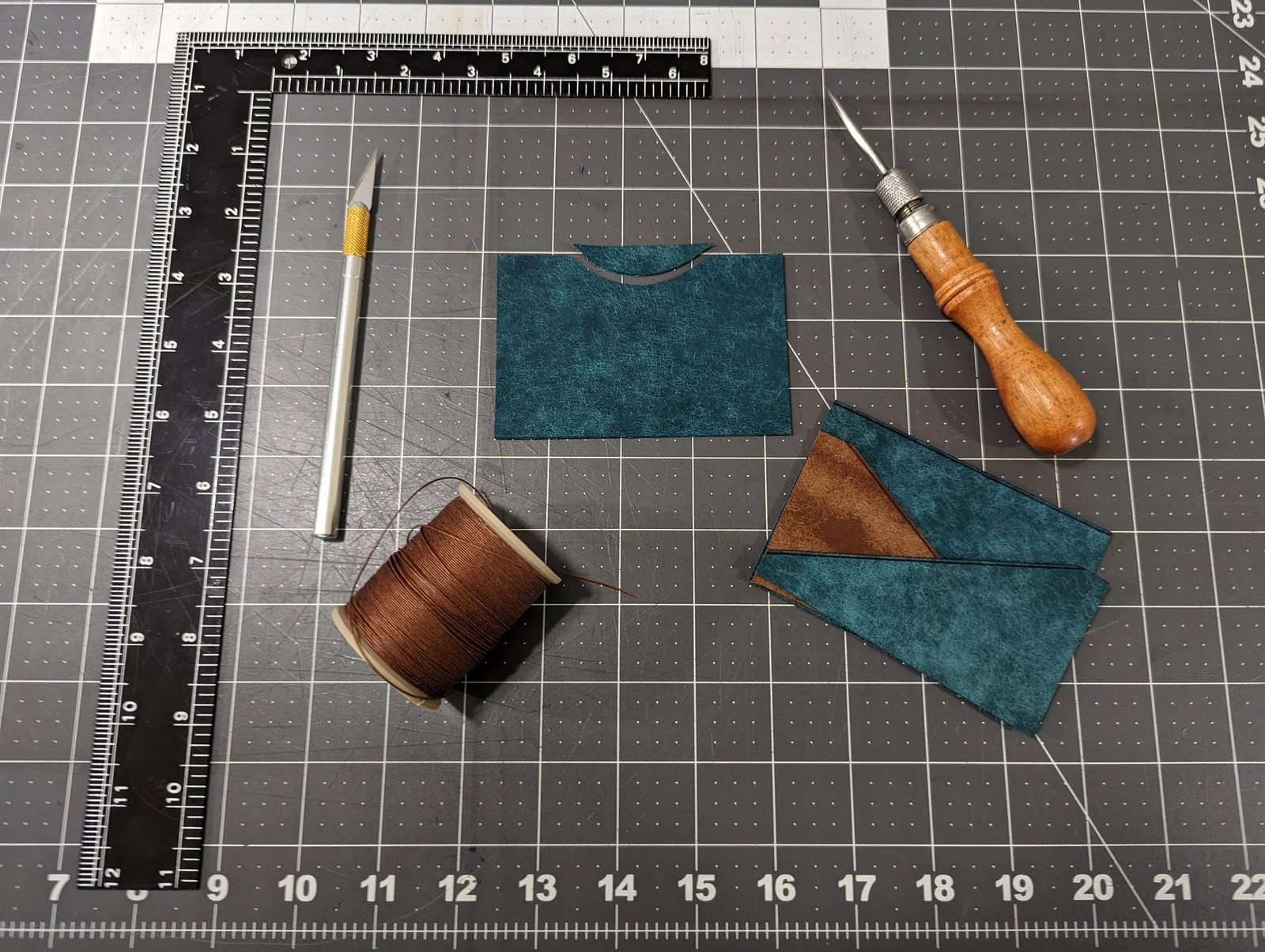
02 · The build
Flat pieces become something useful.
Before a wallet looks like a wallet, it is a stack of cut parts. Pocket height, spacing, color, edge alignment, and the order of assembly all get worked out here.
Good construction is mostly a pile of small decisions nobody notices when they are right.
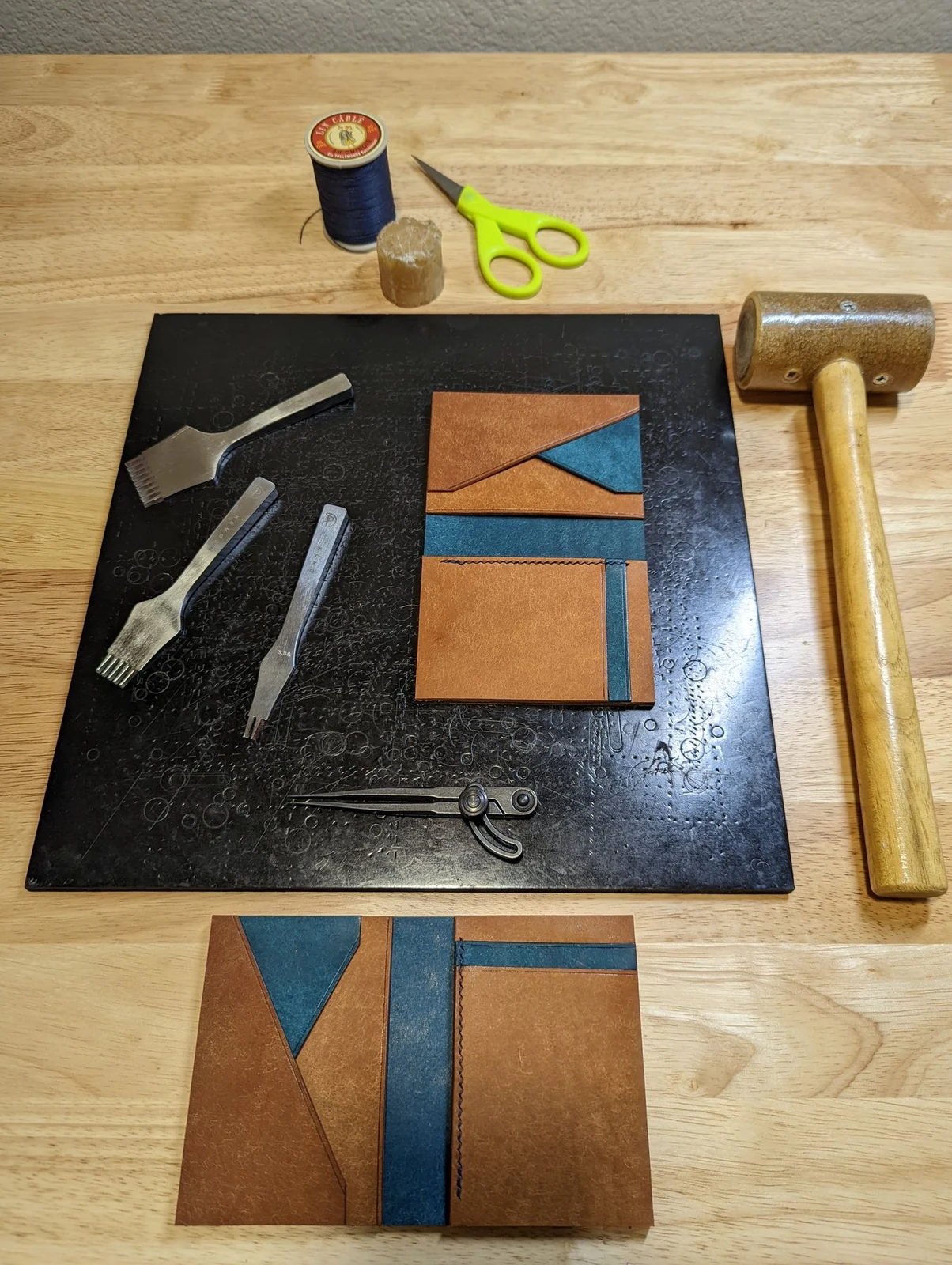
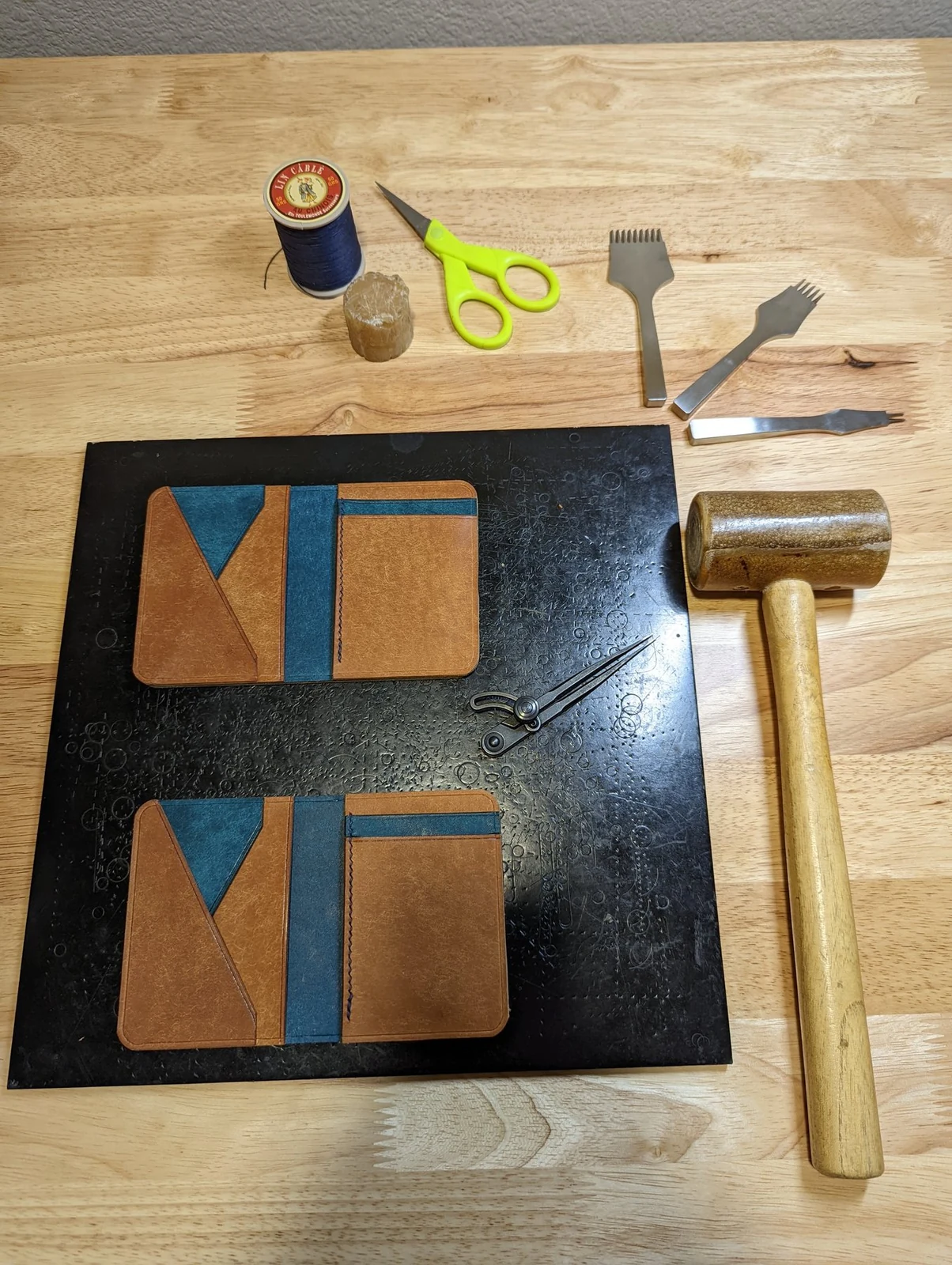
03 · Hole by hole
The stitch starts before the thread.
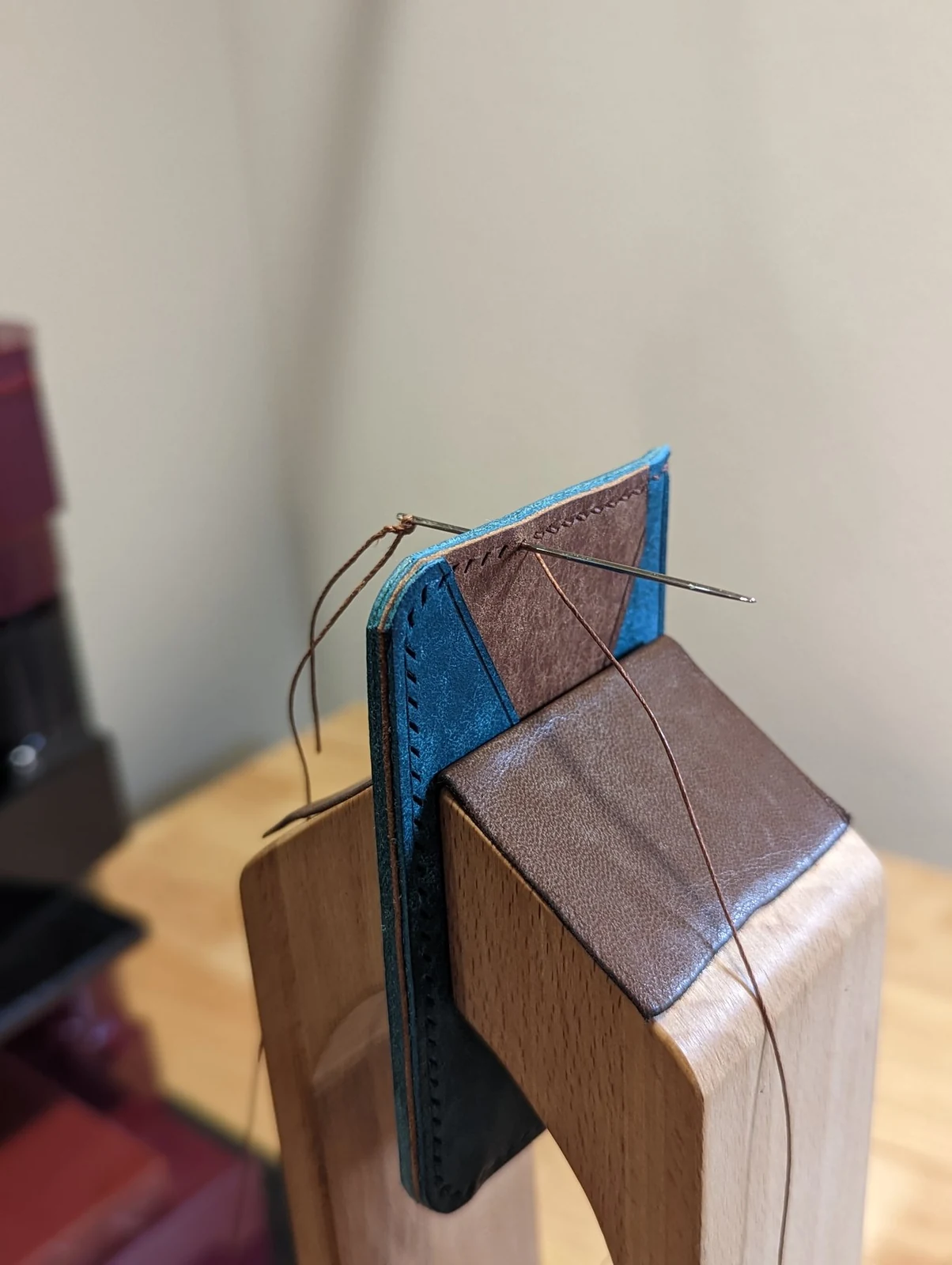
A clean seam begins with a marked stitch line and evenly placed holes. On stitched builds, two needles cross through those holes by hand to form the saddle stitch.
The thread is part of the finished piece too, not something hidden from view. Color and material can be quiet or deliberate depending on the build.
See the threads and materials →04 · The finish
The edges are the proof.
A freshly cut leather edge is rough and fibrous. Moonlight rounds, burnishes, and finishes those edges until they feel intentional in the hand and wear cleanly with use.
Tokonole is one of the small bench products behind that finish. The important part is not the bottle. It is the time spent working the edge instead of leaving it raw.
See what goes into the work →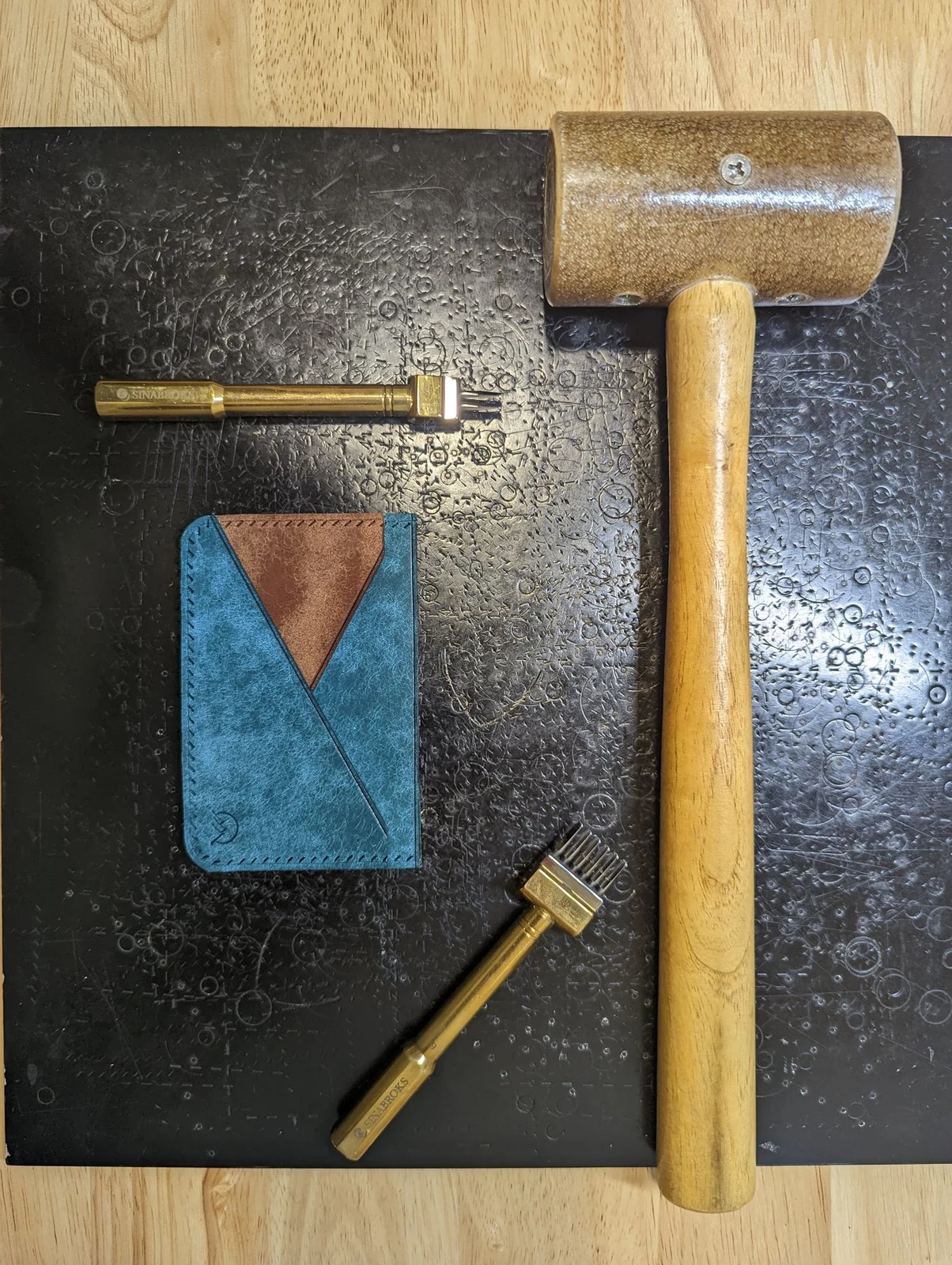
Built for the long haul
It should look better after you use it.
Leather is supposed to change. It softens, darkens, picks up marks, and starts carrying a record of where it has been. The goal is not to keep a piece looking untouched. It is to make one that keeps getting better while it gets used.
More from the workshop